
Best Fertilizer for Flowering Plants: Hibiscus, Bougainvillea, Jasmine and More (India Guide)
Quick answer: Best fertilizer for flowering plants
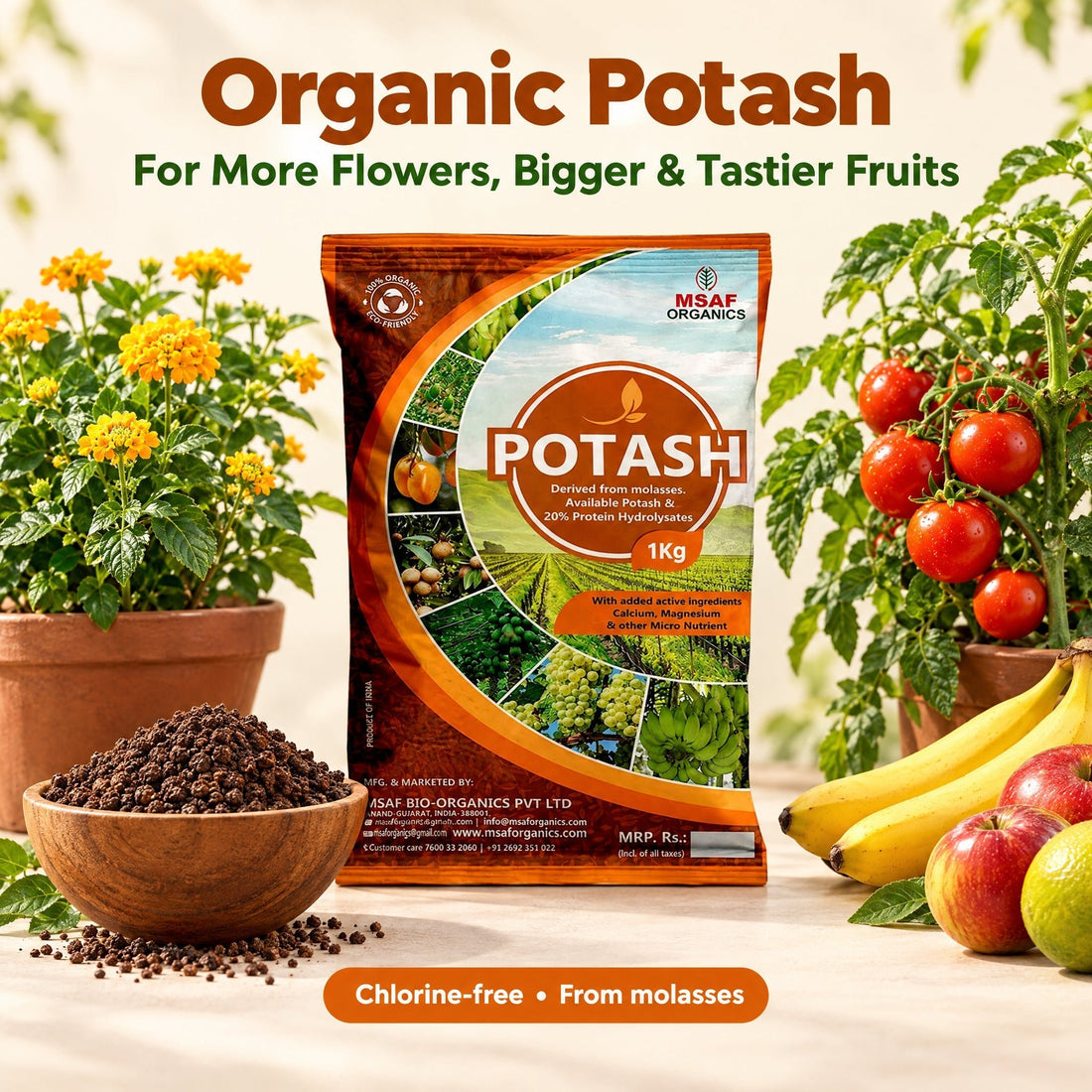
- Potash (more flowers): 25–50 g per plant at the start of flowering.
- Phosphorus (buds and roots): Bone Meal 10–20 g in the pot soil, or PROM 25–50 g per pot at planting.
- Base feed: vermicompost or garden manure to keep the soil rich.
Doses as per the MSAF Bio Organics R&D team.
A very common problem in Indian home gardens: the plant looks healthy and green, but there are no flowers. Hibiscus drops its buds, bougainvillea gives only leaves, jasmine barely blooms. Usually the plant has enough nitrogen (for leaves) but not enough phosphorus and potassium — the two nutrients behind flowering.
Why Is My Plant Not Flowering?
- Too much nitrogen: lots of leaves, few flowers.
- Low phosphorus and potash: buds do not form or drop early.
- Not enough sun: most flowering plants need 5–6 hours of direct sun.
- Tired soil: hard, old pot soil with no organic matter.
The Best Organic Fertilizers for Flowering Plants
Potash — the flowering booster
Organic Potash (14.5% K₂O, chlorine-free) drives flowering and colour. Give 25–50 g per pot or garden plant, and 100–200 g for large flowering shrubs in the ground. Mix into the soil near the roots and water. Read our full potash guide.
Bone Meal — phosphorus + calcium
Pure Bone Meal (20–25% phosphorus, 18–22% calcium): 10–20 g mixed into pot soil, or 50–100 g per flowering plant every 30–45 days.
PROM — organic phosphorus at planting
PROM (16% phosphorus + organic carbon + microbes): 25–50 g per pot as a base dose when planting or repotting.
Epsom Salt — for green, healthy leaves
Healthy leaves feed the flowers. If older leaves are pale, give Epsom Salt — 1 teaspoon per litre of water once a month.
Plant-by-Plant Guide
Hibiscus (gudhal)
Heavy feeder that flowers almost all year. Give potash 25–50 g per pot at the start of flowering and bone meal 10–20 g in the soil. Keep it in full sun and water regularly. Bud drop is often a sign of low potash or irregular watering.
Bougainvillea
Flowers best when slightly stressed: full sun, less water and low nitrogen. Skip heavy compost feeds. Give potash and bone meal at the start of the flowering season, and let the soil dry between waterings.
Jasmine (mogra)
Feed in spring and summer when it blooms. Potash 25–50 g per pot plus vermicompost every few weeks. Pinch the tips after flowering for more branches and more flowers.
Marigold (genda) and seasonal flowers
Mix PROM 25–50 g per pot at planting, then potash when buds appear.
Roses
Roses need a dedicated feed. See our best fertilizer for rose plant guide.
Mistakes to Avoid
- Only nitrogen-rich feeds: they give leaves, not flowers.
- Overfeeding: stick to the doses — more is not better.
- Fertilizer touching the stem: spread around the root zone and water.
- Shady spot: move flowering plants to where they get 5–6 hours of sun.
Fertilizer for Flowering Plants: FAQs
Which fertilizer is best for flowering plants?
A potash-rich fertilizer for flowers plus a phosphorus source like bone meal or PROM, on top of organic matter like vermicompost.
Which fertilizer is best for hibiscus?
Potash 25–50 g per pot at flowering time and bone meal 10–20 g in the soil, with regular watering and full sun.
How do I make bougainvillea flower?
Full sun, less water and low nitrogen. Feed potash and bone meal at the start of the season instead of heavy compost.
How often should I feed flowering plants?
Bone meal every 30–45 days for flowering plants; potash at the start of flowering and during fruiting or peak bloom.
Products used in this guide


Ready to grow a thriving garden?
Explore our range of premium organic nutrients & soil mixes.
Shop Now