
Potash for Flowering Plants: How Much, When and How to Use (India Guide)
Quick answer: How much potash for flowering plants?
- Pot and garden plants: 25–50 g per plant.
- Large flowering plants in the ground: 100–200 g per plant.
- When: at planting, at the start of flowering and during fruiting. Mix into the soil near the roots and water.
Doses as per the MSAF Bio Organics R&D team for MSAF Garden Organic Potash.
Your rose is healthy and green, but gives only two flowers. Your hibiscus drops buds before they open. Your tomato flowers fall without setting fruit. In most of these cases, the plant is not short of food in general — it is short of potassium, the nutrient that powers flowering and fruiting. That is where potash comes in.
What Is Potash and Why Do Flowering Plants Need It?
Potash is the common name for fertilisers that supply potassium (K) — the "K" in NPK. Nitrogen grows leaves, phosphorus builds roots, and potassium drives flowers, fruit size, colour and taste. It also makes stems stronger and helps plants handle heat, cold and dry weather.
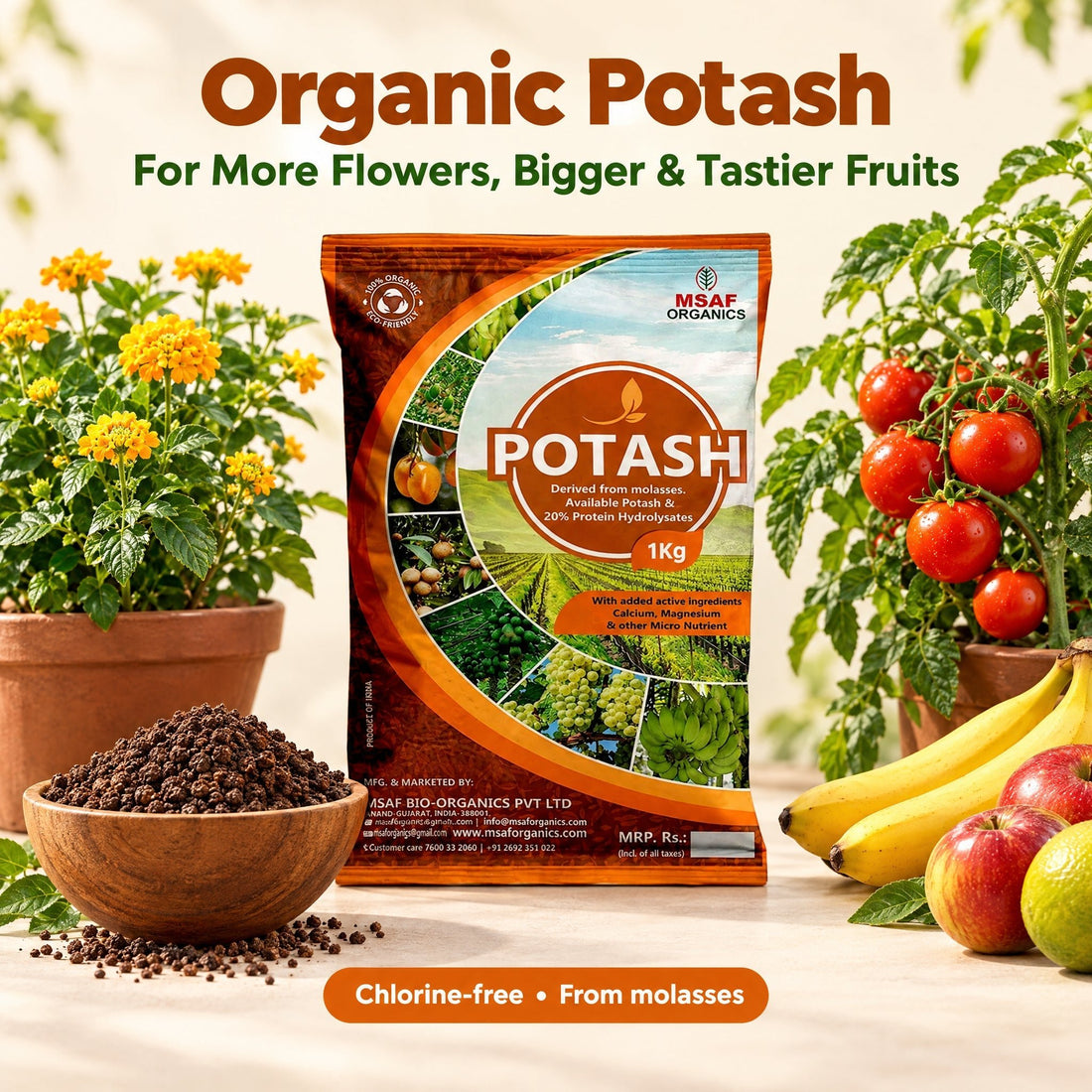
MSAF Garden Organic Potash is made from molasses (a natural source), contains 14.5% potassium (K₂O), is chlorine-free and comes as easy-to-use granules that release slowly.
Signs Your Plant Needs Potash
- Few flowers, or small fruits with poor colour and taste
- Buds and flowers dropping before they open or set fruit
- Weak, thin stems that bend easily
- Plant wilts quickly in heat even after watering
- Brown, burnt-looking edges on older leaves
Best Plants for Potash
- Flowers: rose, hibiscus (gudhal), marigold (genda), bougainvillea, jasmine, chrysanthemum
- Vegetables: tomato, chilli, brinjal, capsicum, okra
- Fruits: lemon, guava, pomegranate, papaya
How to Use Potash: Dose and Method
How much
- Pot plants and garden plants: 25–50 g per plant
- Large flowering plants in the ground: 100–200 g per plant
A 1 kg pack feeds about 20–40 garden plants.
When
Apply at planting (as a base dose), again at the start of flowering, and during fruiting. For roses, hibiscus and other bloomers, the bud stage is the most important time.
How
- Loosen the soil near the root zone.
- Sprinkle the dose around the plant, not touching the stem.
- Mix it well into the top soil.
- Water the plant.
This potash is for soil use only — do not spray it on leaves.
Potash Works Best With Phosphorus
Flowers need both potassium and phosphorus. For more blooms, pair potash with Pure Bone Meal or PROM (phosphorus for roots and buds). If leaves are pale or yellow, add Epsom Salt for magnesium.
Common Mistakes to Avoid
- Too much at once: stick to the dose — more potash does not mean more flowers.
- Putting it against the stem: spread it around the root zone.
- Forgetting to water: potash needs water to reach the roots.
- Only feeding potash: plants still need organic matter like vermicompost or manure.
Potash for Flowering Plants: FAQs
How much potash should I give a pot plant?
25–50 g per plant, mixed into the soil near the roots, then water.
When should I give potash to flowering plants?
At planting, at the start of flowering (bud stage) and during fruiting.
Can potash be sprayed on leaves?
MSAF Garden Organic Potash is granular and made for soil use only. Do not spray it.
Is potash good for roses and hibiscus?
Yes. Potash helps roses and hibiscus form more buds, hold them and give brighter, longer-lasting flowers.
Is this potash chemical-free?
It is an organic potash made from molasses and is chlorine-free.
Get Organic Potash
MSAF Garden Organic Potash is made and lab-tested by MSAF Bio Organics, Anand, Gujarat. Free delivery on orders of ₹449 and above, with Cash on Delivery. Tomato flowers dropping? Read our fix-it guide.
Products used in this guide


Ready to grow a thriving garden?
Explore our range of premium organic nutrients & soil mixes.
Shop Now