
Winter Fertilizer Schedule for Indian Home Gardens: What to Feed and When
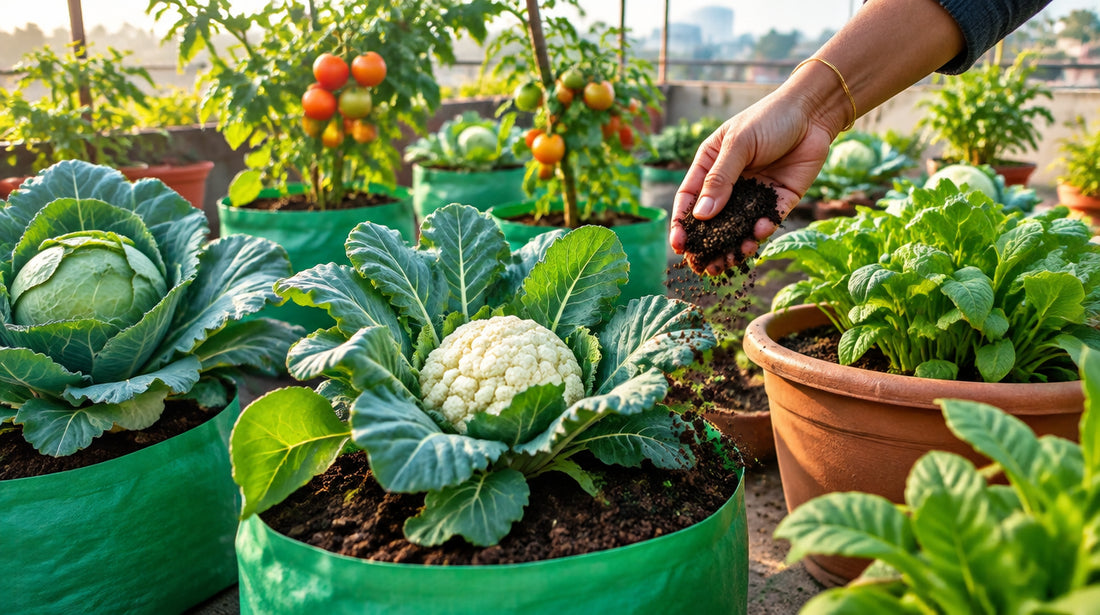
Many Indian gardeners notice the same thing every November: growth slows down, leaves look dull, and the usual fertilizer routine stops giving results. The reason is simple. In winter, soil is cooler, roots absorb nutrients slowly, and microbes in the soil are less active. Feeding plants the way you did in monsoon can cause salt build-up and root stress.
This guide gives you a practical, organic winter fertilizer schedule that works for balcony pots, terrace gardens and kitchen garden beds across India.
Why Winter Feeding Is Different
Between November and February, most of North and Central India sees temperatures drop sharply, while South India stays milder. Whatever your region, the rule is the same: feed lighter, feed slower-release, and feed less often.
- Roots take up nutrients slowly in cold soil, so heavy doses go unused.
- Quick-release or strong liquid feeds can burn roots in cool, damp soil.
- Slow-release organic inputs keep feeding steadily as the soil warms during the day.
The Core Organic Fertilizers for Winter
1. Vermicompost: your base feed
Vermicompost is gentle, rich in microbes and safe even for young seedlings. Mix a handful (about 100-150 g) into the top layer of each medium pot once a month. For garden beds, spread 1-2 kg per square metre before sowing winter crops.
2. Neem cake: feed plus protection
Neem cake releases nitrogen slowly and also discourages soil pests like nematodes and root grubs. Use 1-2 tablespoons per pot every 6-8 weeks. It is especially useful for cauliflower, cabbage, tomato and brinjal.
3. Bone meal: for roots and flowers
Phosphorus helps roots establish and flowers form. Winter bloomers such as roses, chrysanthemum, petunia and calendula respond well to a spoonful of bone meal every 6 weeks.
4. Potash: for stronger, cold-tolerant plants
Potassium improves cell strength and helps plants cope with cold stress. A small pinch worked into the soil once a month supports fruiting vegetables like tomato and chilli.
5. Humic and micronutrient support
Humic substances improve nutrient uptake when roots are sluggish, and micronutrients prevent the pale, yellowing leaves common in cold weather. Use these in light, diluted doses every 3-4 weeks.

A Simple Month-by-Month Schedule
- Early November: Mix vermicompost and a little neem cake into pots and beds before or just after sowing.
- December: Light top-dressing of vermicompost. Add bone meal to flowering plants.
- January: Add a pinch of potash to fruiting vegetables. Apply diluted humic feed if growth looks stalled.
- February: As days warm up, increase feeding slightly with vermicompost and an all-purpose organic booster to prepare for spring growth.
Plant-wise Quick Guide
- Leafy greens (spinach, methi, coriander): Vermicompost only, once a month.
- Root crops (carrot, radish, beetroot): Bone meal at sowing; avoid excess nitrogen, which gives leaves but small roots.
- Cabbage, cauliflower, broccoli: Vermicompost plus neem cake every 6 weeks.
- Tomato, chilli, brinjal: Vermicompost, bone meal and a pinch of potash monthly.
- Roses and flowering plants: Bone meal every 6 weeks and a rose-specific organic mix.
Common Winter Feeding Mistakes
- Overfeeding: More fertilizer does not mean more growth in cold weather. White crust on the soil surface is a sign of salt build-up.
- Feeding wet, cold soil late in the evening: Apply in the morning when the soil is warmer, and water lightly afterwards.
- Ignoring the potting mix: Heavy, compacted soil holds cold water and rots roots. Keep your mix light with coco peat and compost.
- Skipping pest prevention: Weak winter plants attract aphids and whitefly. Neem oil spray every 10-14 days helps keep them away.
Quick Tips to Get More From Your Fertilizer
Water in the morning so roots are not sitting in cold, wet soil overnight. Mulch the soil surface with dry leaves or coco peat to hold warmth and moisture. Move potted plants to a spot with maximum winter sun, ideally 5-6 hours a day. And always loosen the top 2 cm of soil before applying fertilizer so it reaches the roots.
Get Your Winter Garden Kit From Msaf Garden
You do not need a long shopping list. At Msaf Garden you will find everything for this schedule in one place: Vermicompost, Neem Cake, Pure Bone Meal, Potash, Humic Star, Rose Mix and Neem Oil. If you want to save, the Build Your Garden Box lets you pick any 6 fertilisers for ₹749, a good way to put together your own winter feeding kit.
Start light, stay consistent, and your plants will reward you with healthy leaves and steady harvests all winter long.
Products used in this guide


Ready to grow a thriving garden?
Explore our range of premium organic nutrients & soil mixes.
Shop Now